Friday, June 16, 2017

POLAND Addresses Refugee Problem

Polish Foreign Minister Witold Waszczykowski signs a book of condolence
at the French Embassy in Warsaw to pay tribute to victims of the attacks in Paris.
But he has the Best Idea Yet! 
Pay attention, Obama and Trudeau!!!

Poland's Foreign Minister  said, “If there are hundreds of thousands

of young Syrians coming to Europe then we can create an 

ARMY.” 

GREAT IDEA!

The idea of an Army of Migrants also made sense, the Minister Witold Waszczykowski said,
because Poland could ill-afford to  send its troops to the Middle East.
HE has  proposed forming an Army out of the Syrian  men arriving in Europe,
which could then return to their  Homeland  to fight for their FREEDOM.
In an Interview on Polish State Television late Sunday,
Waszczykowski said, “The tens of thousands of  young Syrian men who jump out
of the rubber rafts  and don’t ask  for water, food, or clothes
but ask where they can charge  their smart phones could,
with our help, fight  to get their country  back.
They expect us to send our troops to fight and d ie for  Syria,
while hundreds of thousands of Syrians sip coffee
at the  old town square, or watch us fight for their  security.”
SO TRUE !!!
Poland’s Waszczykowski said  it wasn't right that Western Soldiers
fought ISIS while Refugees 'sat in cafes.'
“They leave their deflated rafts, rubbish etc., 
on the shore for Government employees to clean up.”
Refugees charging cell phones!!! United Nations went all out supplying them
with charging stations !!!
“Are these happy young men really timid souls fleeing war and persecution???
They aren't quite the heart-rending image of disheveled, traumatized refugees
fleeing the horrors of their war-torn home country one might expect,"
Refugees from Syria use smart phones as they wait outside a Government  Office last month.
Stricken Syrian migrants take pictures with friends on $500 smart  phones!!!
Smart phones...the essential  tool of the 21st Century "Refugees’"
fleeing war and poverty!!!
Where are all the women in these pictures???
 At home of course !!! 


June 16: A Day of Sober Rejoicing (1982)

by archivist
As the PCA's General Assembly comes to a close today, Dr. Francis Schaeffer's message remains pertinent.

Truth is rooted in nothing less than the truth that God exists.
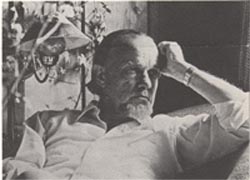
The following written address was delivered by Dr. Francis Schaeffer at the 10th General Assembly of the Presbyterian Church in America which met in Grand Rapids, Michigan on June 16, 1982. This message continues to be something which needs to be periodically re-read and pondered.
It is a profound privilege to be asked to speak today, as this day we are one church.
It is a day of rejoicing. It must primarily be that. And yet it is also a sober day before the face of our dear Lord—a sober day, for while this is now in one way an accomplished fact, in another way it is only a beginning. Like birth itself—birth is something completed—the human being nine months old emerges into the external world. But then, though this is a completed thing, what then matters is what is done with life. There is a life to be lived.
For us, what matters now, with the rejoicing is the looking to our Lord for the common life which we now have together, to be lived and to be lived well in the light of the infinite-personal God’s existence, in the light of His revelation in the Scripture, in the light of the teaching and the sacrificial death of Jesus Christ, and in the light of the coming complete restoration of all things.
We must realize that our being one will take looking to the Lord for help. There will be problems of coordination which must be worked out with patience, with being servants to each other. This will not happen automatically. It will take conscious thought, prayer, and a realistic love not to let our egotisms spoil that which God has given us. I would just say to you there are going to be months, there are going to be times, that you are consciously going to have to realize that there are things that have be worked out in love, and it is imperative that as these things are worked out that the things of personal egotism and personal preference which is not principle would not spoil that which God has given us.
We have much to help us: The Lord Himself, and our common heritage. There are differences in our heritage between the Northern and the Southern Presbyterian Churches. And there are divergencies in our histories since we have left those churches. But our common heritage is much greater than the differences.
Our common heritage is rooted in the eternal final objective reality, the infinite-personal Creator, the triune God Himself. Our common heritage is rooted in the unity of all those who have believed God from the Fall onward. Our common heritage is rooted in the New Testament Church from Pentecost onward. Our common heritage is rooted in the Reformation when God’s people threw off the encrustations of the medieval church and returned to authority resting in Scripture only, and salvation resting only in Christ’s finished Substitutionary work in history on the cross. All these things are our common heritage which far outshadow the differences. But more, our common heritage is rooted back to Geneva and to Scotland with our Presbyterian forefathers, and then again closer to us in this moment of history. Our common heritage is rooted in that we take seriously the Bible’s command concerning the purity of the visible church. This is our common heritage or we would not exist as individual churches and now as one church. And, thus, when the denominations to which we have belonged passed the point of not return we—with tears but with loyalty to our Lord—practiced truth and we stepped out from the denominations when there was no return in these denominations after we had patiently tried.
We have no illusions that in this fallen world and with our own finiteness and our own individual sin that we will have a perfect church but we stepped out looking to our Lord to help us have a true church. It will not be perfect, but we believe indeed we have a call to a true church—with a proper preaching of the Word, unmixed with liberalism; the proper sharing of the sacraments, being able to guard the table not having people sitting there who deny the great things of the living God, the Scriptures, and the living Christ; and also the proper administration to discipline in both doctrine and life.
Yes, we do have differences of background but the common heritage eminently overshadows the differences.
As we look ahead I would suggest certain things should be in our thoughts as individuals and as a particular church of the Lord Jesus Christ. Forgive me if I stress what I have stressed before in talks, articles and books. However, we will not know who we are or what lies ahead as a privilege and a duty unless we remember our Presbyterian recent past history. As we cannot understand our young people and the culture which surrounds us unless we understand the 60’s, so we cannot understand the present religious climate in the United States unless we understand the 1930’s. Prior to the 1930’s the Bible believing Christians had stood together as liberalism came in to steal the churches. Then at different speeds the liberals achieved their theft of the various denominations with their power centers of the seminaries and their bureaucracies. At that point and onward the true Christians instead of standing together as had been the case previously divided into two groups: Those who held to a principle of the purity of the visible church; and those who accepted and acted upon the concept of a pluralistic church. There’s a line just like that. It’s a line that began back there in the 30’s, has continued and marks the religious life of the United States excruciatingly in our own day—those who hold to the principle of the purity of the visible church and those who accept the concept of the pluralistic church.
As you know, I have stressed over and over again the weakness of what became known as “the separated movement.” It is good to remind ourselves again what God’s calling to us is once we have become Christians. Our calling once we have become Christians is to exhibit the existence of God and to exhibit His character, individually and collectively. God is holy and God is love, and our calling is simultaneously to show forth holiness and love in every aspect of life—parent and child, husband and wife, church, state, everything else—an exhibition of the character of God showing forth his holiness and his love simultaneously. In the flesh rather than the work of the Spirit, it is easy to say we are showing holiness and it only be egotistic pride and hardness. Equally in the flesh rather than the work of the Spirit it is easy to say we are showing forth love and it only be egotistic compromise, latitudinarianism and accommodation. Both are equally easy in the flesh. Both are equally egotistic. To show forth both simultaneously, in personal matters, church and public life can only be done in any real degree by our consciously bowing, denying our egotistic selves and letting Christ bring forth His fruit through us—not merely as a “religious” statement, but with some ongoing reality. When we leave to begin a new denomination for Christ’s sake it is so easy to be proud, to be hard toward true brothers in Christ who differ with us, to those who hold to the Bible’s principles but nevertheless do not think the time is right. It is easy to be self-righteous and to self-righteously think that we are so right on this one point that anything else may be excused—very easy, a very easy thing to fall into. These mistakes were indeed made, and we have suffered from this and the cause of Christ has suffered from this through these now 50 years. By God’s grace as we begin together, let us consciously look to our Lord for His help not to give Satan the victory by making this tragic error.
But equally, let us not allow any place for confusing Christian love with compromise, latitudinarianism and accommodation! The spirit of our age is syncretism in all the areas of life, in all the areas of thought. The spirit of our age is syncretism, and thus accommodation is the rule. The spirit of our age is the age of syncretism in contrast in truth versus error; and this being so, accommodation is the common mentality.
Those in the churches who said they were practicing love but who confused this with compromise and accommodation have not been static in their error. Compromise is never static. It always progresses. Thus what began as ecclesiastical compromise has become the acceptance of a series of tragedies, a series of things which deny truth as truth. A series of tragedies which rest in the loss of the realization that truth as truth demands differen-tiation. Accomodation progresses and it is increasingly forgotten that truth, if it is really truth and not just subjective truth inside of our own head, demands confrontation, loving confrontation, but confrontation. If I lose the concept of confrontation it must be asked, do I believe that truth is truth. We must remind each other that all must be with true love and that the exhibition of God’s holiness must never be confused with hardness. Yet equally we must realize the responsibility to show forth and practice holiness as we go on together filling a great need in the church of Christ today not just in Presbyterian circles but in the church as a whole, and then in our society and in our culture. We have a great responsibility in our Pres-byterian circles, but it doesn’t stop there. It goes on, our responsibility, our duty, our privilege, as we become one, concerning the whole church of the Lord Jesus Christ, and then out into the society and the culture.
Those who took the path of accommodation have not stopped on the level of one ecclesiastical unit but have had much to do in shaping that which is known as evangelicalism today.
At this point I would like to repeat a part of the talk I gave earlier this year at the Congress on the Bible in San Diego:
When Dr. Koop, Franky and I were in the midst of the seminars of “Whatever Happened to the Human Race,” one of us received a leter from someone in the evangelical ranks. He holds a good theological position in regard to Scripture and I like him. In his letter, however, he said: “I see the emergence of a new sort of fundamentalist legalism. That was the case in the trust conceiving ‘false evangelicals’ in the inerrancy issue and is also the case on the part of some who are now saying that the evangelical cause is betrayed by any who allow exceptions of any sort in government funding in abortion.” Now, speaking of the abortion issue, of course we would have to give some clarification. I know of no Protestant who does not take into consideration the health of the mother. If with tears the doctor cannot save both of his patients, the child and the mother, this is taken into consideration. It is all the other qualifications which are tacked on to the statement, I am against abortion except for this, that, the other thing, and 20 things more. And when we come to that place we have a question to ask, the question is raised if those who do this understand that it is human life as such that is involved in contrast to some individual’s or society’s concept of their own happiness. And when somebody tacks on all these exceptions one must say, do they understand all that truth means in the area of human life and the tremendous issues involved of human life as human life being important because we are made in the image of God in contrast to human life being able to be destroyed for either the individual’s happiness, the mother who thinks it’s for her happiness, or for society’s good. One must ask, do people really understand this, do they understand what truth means when they indeed forget what the real issue is at the level of human life?
I would like to consider the phrase &quota new sort of fundamentalist legalism&quot in regard to all the areas we have been talking about.
If what is involved in the phrase “fundamentalist legalism” is the loveless thing that some of us have known in the past, we of course reject it totally. The love of God and the holiness of God, as I’ve said before, must always be evident simultaneously. And if anyone has wandered off and later they see their mistake and they return, then surely the attitude should be not one of pride on our part that we have been right, but the attitude must be one of joy, and the playing of joyous music, and the singing of songs, and yes I would even say dancing in the streets because there has been a real return.
Again, if the phrase &quotfundamentalistic legalism&quot means the down-playing of the humanities as unhappily has so often been the case in certain circles, the failure to know that the intellect, that human creativity by Christians and non-Christians, that the scholarly, that the Lordship of Christ in all of life are all important and are included in true spirituality, then my work of 40 and more years and the books and the films, would speak of my denying it totally.
And if the term “a new legalistic fundamentalism” means the confusion of primary and secondary points of doctrine in life this too should be rejected.
But when we have said all that, when we come to the central things of doctrine including maintaining the Bible’s emphasis that it is without mistake an the central things of life, then something must be profoundly considered. Truth carries with it confrontation, loving confrontation, but confrontation nevertheless. If our reflex action is always accommodation regardless of the centrality of the truth involved, there is something profoundly wrong. As what we may call holiness without love is not God’s kind of holiness, so what we may call love without holiness including when it is necessary confrontation, is not God’s kind of love. God is holy and God is love.
This ends the segment that I have taken from the San Diego talk, and now to pick up and go on: That which has come out of the concept of accomodation has indeed grrown and spread. First ecclesiastical accommodation. Then when the Scriptures were with the existential methodology in the evangelical ranks this mentality meant that leadership was not provided in saying that here was a watershed issue which required a line to be drawn between those who held the historic view of Scripture and the new and weaker view. Now this is not to say that htose who hold and held this view are not often brothers and sisters in Christ nor that we should not have warm loving personal relationships with them, but when one is considering the issue of Scripture at this point we should realize that the name evangelical really must be considered here, and the name evangelical was continued to be accepted and used about seminaries and other institutions as though their unscriptural view of Scripture made no real difference. This is real accommodation.
And when the human life issue came upon us, this same mentality of accommodation meant that no leadership was provided in meeting the issue any more than it had been in the scriptural issue. There was a great silence on this issue until some of God’s people stirred themselves—largely and in many places in spite of the leadership that had the sense of accommodation. They had forgotten that the unique value of human life is unbreakably linked with the fact of the existence of the infinite-personal God.
But I would say, the accommodation does not stop; the whole culture has been squandered and largely lost. Eighty years ago there was a Christian consensus in this country; all the most devastating things that have come have come in the last 40 years. Anybody who here is 55 years of age, all the most devastating things in every area of our culture, whether it be art or music, whether it be law or government, whether it’s the schools, permissiveness and all the rest, all these things have come climactically in our adult lifehood if you’re 55 years of age. But, the mentality of accommodation did not raise the voice, it did not raise the battle, it did not call God’s people to realize that this is a part of the task to speak out into the culture and society against that which was being squandered and lost and largely thrown away. An accommodation mentality ecclesiastically in the earlier years led to a lack of confrontation in our culture, society and in the country. As the great loss occurred in sliding from a Christian consensus to a humanistic one from the 40’s onward more and more things were lost, more and more things were allowed to be robbed, more and more things slid away.
And, let us say with tears, if one has the mentality of accommodation we must realize that it will still continue. A mentality of accommodation provides no basis for confrontation with tears concerning the oppression of Christians by those countries that hold the final reality to be merely material or energy shaped by pure chance. This mentality of accommodation provides no basis for a clear and public stand for our brothers and sisters in Christ who know oppression in such a situation. The mentality of accommodation provides no basis for a cry against tyranny as tyranny—not only tyranny against Christians but tyranny against Man, spelled with a capital “M,” who is made in the image of God. The mentality of accommodation provides no basis for fighting tyranny such as our forefathers fought tyranny, as we know the great and flaming names of the Scottish background and the Reformation who really stood not just against tyranny against Christians but understood that a Christian is called upon to stand against all tyranny. The mentality of accommodation provides no basis against not only internal tyranny in such countries as I’ve described but an expanding tyranny to new parts of Europe and the globe. A mentality of accommodation provides no basis for a strong stand in this situation.
This is not our common heritage. As Presbyterians our heritage is with a Calvin who dared to stand against the Dukes of Savoy regardless of what it cost. Our heritage is with a John Knox who taught us, as I’ve stressed in A Christian Manifesto, a great theology of standing against tyranny. Our heritage is with a Samuel Rutherford who wrote those flaming words, Lex Rex—only the law is king and “king” under any name must never be allowed to arbitrary law. Are you Presbyterians? Have we a Presbyterian body? These men are the men who give us our heritage—Calvin and his position, John Knox and his, Samuel Rutherford his, and no less than these in our own country, a John Witherspoon who understood that tyranny must be met and must be met squarely because tyranny is wrong. These who understood that true love in this fallen world often meant the acceptance of the tears which go with confrontation. None of us like confrontation, or I hope none of us do. But in a fallen world there is confrontation, there is confrontation concerning truth, there must be confrontation against evil and that which is wrong. The love must be there but so must the hard thing of acting upon differentiation, the differentiation God gives between truth and falsehood, between what is just, based on God’s existence and His justice, and injustice.
We are Presbyterian; we are Reformed. But our being together and our responsibility and opportunity does not stop merely with being Presbyterian and Reformed. As one as we now are, we can in some measure speak with the balance of love and holiness to help to provide help for the poor church of the Lord Jesus Christ as a whole in this country; and then beyond into the world to provide help for the church of the Lord Jesus Christ in helping stop this awful slide. This slide in regard to the church, this slide in regard to Scripture, this slide in regard to human life, this slide regarding the oppression of our brothers and sisters in Christ, this slide in regard to tyranny toward others in the world. It is forgotten that a part of the Good News is to take a stand; that is a part of the Good News in a broken, as well as lost, world. The very preaching of the Good News is taking a stand, but it’s forgotten that just as we heard from the former
moderator that there isn’t a dichotomy between the proclamation of the Word and caring for people’s material needs with compassion and love, so also it must be emphasized that there is no dichotomy between preaching the Good News and taking a stand—and in fact, if there is nothing to take a stand upon there is no reason for preaching the Good News.
We are to be Presbyterian and Reformed, but that is not the limiting circle of our responsibility. I would say to you, I plead with you concerning this, we are to be Reformed and Presbyterian but that is not the limiting circle of our responsibility. Our distinctives are not to be the chasm. We hold our distinctives because we are convinced that they are biblical. But God’s call is to love and be one with all those who are in Christ Jesus and then to let God’s truth speak into the whole spectrum of life and the whole spectrum of society. That is our calling. The limiting circle is not to be just that we are Presbyterian and Reformed. We hold these things because we believe indeed they are that which is taught in Scripture. But out beyond that there is the responsibility, there is the call, to be something to the whole church of the Lord Jesus Christ, and out beyond the church of the Lord Jesus Christ to the whole society and to the whole culture. If we don’t understand this we don’t understand either how rich Christianity is and God’s truth is, nor do we understand how wide is the call placed upon the Christian into the totality of life. Jesus could not be said to be Savior unless we also say He is Lord. And we cannot honestly and rightly say He is our Lord if He is only a Lord of part of the life and not of the totality of life including all the social and political and the cultural life.
Our limitation of responsibility is not to be merely, as we being together, within the circle of Presbyterian and Reformed though it is to be this
We begin together. May we ask God’s grace that we may do well in the whole extent of the possibility of our calling. I want to tell you I doubt if many of you realize how great the possibility of your calling is as you sit here today. It is tremendous. There is a tremendous need in our day. We have largely lost our culture. The poor church has not been give a clear direction. You have tremendous opportunity; you have a calling this day; I have a calling this day; we have a calling this day by God’s grace that we may do well in the whole extent of the possibility of our calling.
It is intriguing to me that in the last six months that some important voices in the media and some of those who are pushing for a pluralistic church have been using the designations: “separatist” and “ecumenical,” I’m intrigued because I haven’t heard these terms used like this for a number of years. We do not wish to be separatist in any poor sense and we do not wish to be ecumenical in the bad sense. But whatever terms distinguish the difference, as we begin together because truth is truth, we must be willing ecclesiastically, concerning the Scripture, concerning human life, concerning oppression of our brothers and sisters in Christ, and concerning the spread of tyranny, we must be willing when it is necessary to accept the privilege and the duty of confrontation rather than accommodation. This is the command of Scripture, and it is the example of the Lord Jesus Christ.
Let us be committed to each other, to the commands of the Scripture and to the example of the Lord Jesus Christ of understanding that truth is truth. We are not opposing these things for abstract doctrinal concepts, but what we are talking about is truth. We are talking about truth, and truth is not abstract. Truth is rooted in nothing less than the truth that God exists. This is the truth and that He has revealed Himself in the Scripture and He has sent His son to die for sinners like ourselves. If these things are really truth then it is not a place for synthesis, it is a place for antithesis. With love it is a place for confrontation and not just a mistaken accommodation which lacks a proper exhibition of God’s holiness.
Dr. Schaeffer’s message was later reprinted in the first issue of Equip magazine, a publication of the Christian Education & Publications Committee of the PCA. The message was reproduced on pages 7 – 9 of the April 1995 issue (Vol. 1, No. 1). Reflecting on the article, the editor asked these questions in a sidebar:
  1. What do we mean when we speak of our common heritage and why is it important?
  2. What is the difference between uniformity and unity?
  3. Schaeffer refers to Christian compromise demonstrated by accomodation and latitudinarianism. Give some examples.
  4. What is a Christian consensus and has that ever prevailed in America?
  5. Is our role more limited or more enhanced because of our common Reformed and Presbyterian heritage? In the church? In the world?
  6. Schaeffer talks about our calling. What is our calling as individuals? As a denomination? As members of the universal church?
  7. Discuss some specfic ways in which we can actually do “loving confrontation.”

Thursday, June 15, 2017

Books read in June 2017

1. Dunstan: One Man Will Change the Fate of England by Conn Iggulden  (Author)

This most gifted author of historical fiction has introduced me to a character and a century of which I knew nothing.  It appears an accurate account on the whole. The pace sees a little slow at times but some parts are indeed gripping. I had not realised that clerical celibacy was not a 10th century norm. So my education has been enhanced.

2. A Way to Pray: A Biblical Method for Enriching Your Prayer Life and Language by Shaping Your Words with Scripture by Matthew Henry  (Author), O Palmer Robertson (Editor)

Matthew Henry is justly famous as a biblical commentator so I am surprised this excellent volume is not so well known. O Palmer Robinson deserves thanks for revising and modernising it. You will not realise it is modernised until you find that prayer for travellers now encompassed travel by air as well as sea. I consider this the most helpful aid to prayer I have ever read. It shows Henry's amazing knowledge of Scripture that he could take countless biblical texts and form them into prayers which are there to stimulate and aid the reader's praying. This is the one book I have with my Bible to aid daily devotions. It is a book I have read more than once.

3. Travel with John Bunyan: Exploring the World of John Bunyan, Author of "The Pilgrim's Progress" (Travel Guide with): Exploring the World of John Bunyan, Author of "The Pilgrim's Progress" by John Pestell  (Author)

This book has a good biographical account of Bunyan as well as a comprehensive guide to the places in his life and those associated with Pilgrim's Progress. This whole series of books are excellent. Here one can but marvel at the determination of Bunyan and his courage in the face of persecution and imprisonment. One also sees the hand of providence for confinement set Bunyan free to write and minister to his and futire generations.

4.Eye of the Needle by Ken Follett  (Author)

Probably the best thriller I have read in a long while. Had so far only read his long saga starting with The Pillars of the Earth. This is much more of a page turner. If I read more Follett perhaps he will displace Seymour as my favourite thriller writer.My only criticism is that the sex is unecessarily explicit.The same message could have been communicated with more subtlety, less salacious.

Wednesday, June 14, 2017

"Today in Church History" June 13, 1525

Today we remember one of my favorite events in church history. On this day in 1525, Martin Luther married Katerine von Bora. 

Katerine (Luther often called her Katie) was a nun. A number of the nuns in her convent embraced the Gospel. Luther developed a plan for the ladies to escape the convent. Let me share with you the story. 

One of Luther's friends sold fish to the convent. After he had made his delivery, he hid the ladies in empty herring barrels. He then drove his wagon out of the convent with the women in the back of the wagon in the barrels. 

Luther found husbands for all the women except one nun. You guess it. He could not find a suitable match for Katherine. Later he married her. They had a happy marriage for 21 years. 

Katerine made a positive difference in Luther's life and ministry. Luther was able to carry on the work of the Reformation because of his wife's love and support. 

Luther respected his wife's intellect. She regularly participated in the theological discussions with the guest around the dinner table. SDG 
Pastor Dan Korzep

Tuesday, June 13, 2017

Reflecting on last week's election.

This was the fifth time in three years that I have been surprised by an election. The previous four were pleasant surprises this was not.
First, to state the obvious May bet on what she thought was a sure winner only to have it falter in the home stretch. Why the failure in that she lost a good majority for a hung parliament? 
She ran a presidential style campaign and was advised by a small inner circle. The style was not well received. I watched the last Conservative party election TV broadcast and it was all by and about May. Corbyn had a better personal appeal to voters. She was slated for failure to debate face to face with other leaders. I do not blame her but it cost her bad publicity. 
She called the election to have a better hand in negotiating Brexit but the manifesto diverted her from this. Critics fastened on unpopular manifesto items which her advisors had promoted and she never really got back to Brexit. Among the unpopular items were a means test restricting a £100 winter fuel payment to poorer pensioners. Personally I have no objection unless it cost more to means test than revenue saved. But it was fastened on as was removing the triple lock on old age pensions. Again I was not bothered though I am a pensioner, but the media fixed on this. Finally social care for the elderly.This was labelled as a dementia tax. It was not . It would mean that people whose family did not provide for their care would have care then taken from thier estate after death up to a floor of £100,000 remaining as inheritance. I think this reasonable but others did not. 
By contrast Corbyn had a magic money tree with free gifts for all. I will not list them but he came across as Santa, May as the wicked witch.
    I was saddened by the result especially when a personal friend and at least one good evangelical lost their seats. I was only gratified by Mrs Krankie's SNP having a big set back, enough to banish any realistic prospect of a second independence referendum. 
SO SHE GOES TO GOVERN WITH THE HELP OF THE DUP FROM NORTHERN IRELAND. I THINK THIS IS RIGHT. RESIGNING AS PM NOW WOULD BE FOLLY. I REJECT THE TWO MAIN CRITICISMS OF THE DUP. FIRST THAT THEY ARE SOCIALLY CONSERVATIVE REJECTING THE LGBT agenda and abortion. Good for them. Secondly working with the will alienate Sinn Fein the republican party in Northern Ireland and jeopordise the peace process. SF are no real democrats. They refuse to take their seats as Westminster. May owes them nothing.
    I pray she can succeed as PM and not have to resign with a subsequent new election. The crowing Corbyn who now behaves like he won not lost last week would probably win and that would be an unmitigated disaster, a return to discredited socialism. 
    My comfort is that I do not put my trust in princes. BTW, I am not a Conservative though I voted that way. I am a true conservative believing the party of that name has lost its conservatism, particularly over sexual ethics.

Monday, June 12, 2017

Four things difficult or impossible to communicate

Last night I preached on Genesis 5 to 6:8, the effect of sin in the line of Adam.  Death now rules and all of man's nature is affected by sin. This is what is called total depravity. It does not mean that people are as bad as they can be. It means all of our nature, including our reasoning is corrupted by sin. Reason will not persuade a person into eternal life in Christ. I needs the Holy Spirit to work God's grace in the heart.

My experience is that people will hold tenaciously to error despite all one's efforts to persuade them to the contrary. Here are three examples. The first I experienced from years back, the second two more recently.

1. The strong Arminian will not budge. As a Calvinist I am resigned to this. Firstly because total depravity is true. The intellect, man's reasoning will be at fault. Secondly I have to conclude some people are predsetined to be Arminians.

2. The teetotaller for whom all alcohol is evil, its consumption sinful. I point out that wine gladdens the heart of man, Paul commends it for the stomach's sake. Drunkenness is a sin but the Israelites were to buy what their hearts desired, including strong drink, and rejoice before theLord. But the militant abstainer does not take these verses on board. Not does he learn from history. Total abstinence, signing the pledge is a recent phenomenon in church history. Prohibition failed as an American law. But the abstain militants learned nothing from history.

3. Lastly a recent manifestation of incomprehension. The Irish Sinn Fein party has members elected to our Westminster parliament but they refuse to participate for they will not take the oath of loyalty to the Crown required of MPs. They rightly say that those who elect them to parliament know this and accept they will not be represented. However I would raise the question of constituents who are in the minority in Sinn Fein areas. They did want to be represented in parliament for they voted for other parties. An MP is to represent all their constituents. Those not voting for SF are denied any representation against their will. This is totally unjust so in my opinion SF's behaviour is a scandal.  Where are human rights laws when you need them? Those not comprehending my reasoning tell me that SF is being democratic. This of course is the IRA version of democracy.

4. This one is an addition to my original three above. Some Christians will remain unconvinced as to the evil of gambling. I have had someone unfriend me for calling gambling a sin. But then he was a pastor in Las Vegas. Another American tells me it is no different from spending on entertainment or a vacation. I will not refute this myself but refer you to Phil Johnson.

Thursday, June 08, 2017

ON THIS DAY IN 1980 Dr. Martyn Lloyd-Jones preached his last sermon.


ON THIS DAY IN 1980 Dr. Martyn Lloyd-Jones, recognized as one of the greatest preachers of the 20th century (His books and recorded sermons give evidence that those people are right.) preached his last sermon. 
Lloyd-Jones was born in Cardiff, Wales near the end of 1899. Perhaps the most interesting event of his childhood occurred when he was ten years old. His family home caught fire in January while he and his brothers were sleeping in it. Although their lives were saved, the family lost almost everything they owned, and their finances never recovered. This aroused in Lloyd-Jones a life-long determination to succeed. 
Consequently, he entered medical school, completing his studies before he reached the legal age to practice medicine. He became chief clinical assistant to notable physician Sir Thomas Horder, who described him as “the most acute thinker that I ever knew.” 
Although poised for a career as a great doctor, Lloyd-Jones abandoned medicine in 1924. He began to question whether he was really a Christian at all and realized he needed to be converted and born again. No sooner had he submitted to Christ than souls became his passion. He thought of the people he had left behind in Wales and went back to share his newly discovered faith with them. His first sermon was in Wales in 1925, calling for spiritual awakening. 
A small church in Aberavon, Wales asked him to become their pastor, and he accepted. The town’s doctors feared he was going to steal their patients, but Lloyd-Jones was careful to give no offense in that regard. Years later one of the doctors requested his advice and Lloyd-Jones made a clear and correct diagnosis. After that, requests for his medical knowledge were so continual they threatened his pastoral work. Meanwhile, his preaching proved productive. People came to know Christ with such transforming power that even alcoholics were set free from drink. 
In 1939, he became an associate to G. Morgan Campbell at Westminster Chapel, London. In that great church he preached many series, some of which he gathered into books. One of the most famous was a study of Christ’s Sermon on the Mount. His books made him internationally famous. 
Lloyd-Jones preached his last sermon at the opening of Barcombe Baptist Chapel on this day, 8 June 1980. His topic was Joshua 4:6, “What mean ye by these stones?” One person in attendance recalled that Lloyd-Jones began slowly and seemed to find his way with some difficulty. Then, “wondrously, it was as though a sudden power came upon him that energized him and electrified the congregation. Suddenly all were awake and alert: God was speaking with authority through a man.” The following year, Lloyd-Jones died in his sleep. He was eighty-one years old. —Dan Graves

June 8: Tribute to a Godly Wife

 I like the story of Edwards arriving late for a service while the minister was praying for Edwards thanking God for such a godly man. So opening his eyes after prayer and seeing Edwards, the minister said he had heard that Edward's wife had more godliness.

by archivist
Obviously the important thing here is not the date of the article, but the message of how a godly home bears a great blessing for generations to come. May we all seek to live to glorify our Lord with our lives, in all that we do and say.
[excerpted from THE CHRISTIAN OBSERVER, Vol. XXXI, No. 23 (5 June 1852):  89, column 5.]
THE FAMILY OF PRESIDENT EDWARDS.
It was an unspeakable privilege in the view of the late President [Jonathan] Edwards, that when surrounded by a young and growing family, and when his duty to his people, especially in seasons of revival, necessarily occupied his whole attention, he could safely commit his children to the wisdom and piety, the love and faithfulness of their mother [Sarah Pierpont Edwards]. Her views of the responsibility of parents were large and comprehensive. “She thought that, as a parent, she had great and important duties to do toward her children before they were capable of government and instruction. For them she constantly and earnestly prayed, and bore them on her heart before God, in all her secret and most solemn addresses to him; and that, even before they were born. The prospect of her becoming a mother of a rational, immortal creature, which came into existence in an undone and infinitely dreadful state, was sufficient to lead her to bow before God daily for His blessing on it; even redemption and eternal life by Jesus Christ. So that, through all the pain, labor, and sorrow which attended her being the mother of children, she was in travail for them that they should be born of God.
She regularly prayed with her children, from a very early period, and, as there is the best reason to believe, with great earnestness and importunity. Being thoroughly sensible that, in many respects, the chief care of forming children by government and instruction, naturally lies on mothers, as they are most with their children at an age when they commonly receive impressions that are permanent, and have great influence in forming the character for life, she was very careful to do her part in this important business. When she foresaw or met with any special difficulty in this matter, she was wont to apply to her husband for advice and assistance; and on such occasions they would both attend to it, as a matter of the utmost importance. She had an excellent way of governing her children; she knew how to make them regard and obey her cheerfully, without loud, angry words, much less heavy blows. She seldom punished them; and in speaking to them, used gentle and pleasant words. If any correction was necessary, she did not administer it in a passion; and when she had occasion to reprove and rebuke, she would do it in a few words, without warmth and noise, and with all calmness  and gentleness of mind. In her directions and reproofs in matters of importance, she would address herself to the reason of her children, that they might not only know her inclination and will, but at the same time be convinced of the reasonableness of it. She had need to speak but once; she was cheerfully obeyed; murmuring and answering again were not known among them. In their manners they were uncommonly respectful to their parents. When their parents came into the room, they all rose instinctively from their seats, and never resumed them until their parents were seated; and when either parent was speaking, no matter with whom they had been conversing, they were all immediately silent and attentive. The kind and gentle treatment they received from their mother, while she strictly and punctiliously maintained her parental authority, seemed naturally to beget and promote a filial respect and affection, and to lead them to a mild, tender treatment of each other. Quarreling and contention, which too frequently take place among children, were in her family wholly unknown. She carefully observed the first appearance of resentment and ill-will in her young children, toward any person whatever, and did not connive at it, as many who have the care of children do, but was careful to show her displeasure, and suppress it to the utmost; yet not by angry, wrathful words, which often provoke children to wrath, and stir up their irascible passions, rather than abate them. Her system of discipline was begun at a very early age, and it was her rule to resist the first, as well as every subsequent exhibition of temper or disobedience in the child, however young, until its will was brought into submission to the will of its parents; wisely reflecting, that until a child will obey its parents, he can never be brought to obey God.

Why I am voting Conservative today.

First of all I am no longer a party member. I used to be until the Conservatives abandoned the family for so called gay rights. I was a Conservative Ealing councillor for eight years but after I lost my seat they chose a serial adulterer as mayoral candidate in London and I resigned. They usually still got my vote except in EU elections where I was UKIP. Then Cameron went for same sex "marriage" and I refused to vote Conservative at the last election. I went UKIP. Now I am back to Conservative. Why? Our sitting MP ever since the Nulabour revolution has been Stephenl Pound. He is a personal friend. An upright RC who votes the Christian way on all moral sexual issues. But he is Labour so he knows he will never get my vote unless the Conservative candidate fails to answer my questions in the way I want. But she came out tops. She opposes abortion after 20 weeks, thinks examination of church youth work for extremism is folly as is a testing of public sector workers for allegiance to British values. The Conservative party is likely to give us a hard Brexit, defend the realm and manage the economy. I do not trust Labour on any of these. May has been rightly criticised for a too presidential campaign but Corbyn's record is not credible. Far left supporters of terrorists will never get my vote nor a high tax party. As to protecting the NHS, it is a bottomless pit but not a poor service in my experience. I do not oppose outsourcing of provisions otherwise dubbed privatisation. May has been criticised for loss of winter fuel allowance. I would only oppose this it it cost more to means test than the cost of likely saving. She is criticised on social care for the elderly. On that my first observation is that in a United Kingdom all should be treated the same, not some Scot free. Then if family will not provide for the elderly then their capital above £100,000 going to pay for government provided care seems reasonable to me if the money is taken from the estate after death. So Conservative is for me the lesser of the two possible evils who will form the next government. I pray for a good increased May majority as being in the country's best interest. May God protect us from a hung parliament or God forbid, Corbyn. I willl stay up as usual to hear the results. My prediction is a slightly increased May majority, Farron to resign and give better personal Christian testimony and civil war in the Labour party. Now off to vote as soon as polls open.

Tuesday, June 06, 2017

Is Jihadi terrorism like the IRA?

This comes from a friend, Ian Barrs, on Facebook

I do recognise that dealing with radical Jihadis is different from dealing with the IRA/INLA etc. Those were groups with essentially political aims who happened to be associated with one side of a religious/cultural divide, but were not primarily motivated by religious ideology. ISIS is, as Alexander Staniforth put it, an "apocalyptic death cult". Their aims and ambitions are fundamentally incompatible with Western civilization. We can't negotiate with them in the way that we did (like it or not) with the IRA, whose final "abandonment of the armed struggle" came about in part because they came to believe they could achieve a substantial proportion of their political goals without violence. While I recognise their are political elements to Islamic Jihadist terrorism, I'm less optimistic than some that any change to, for instance, US or British foreign policy would make a major or rapid difference.

BUT: their *tactics* - terror attacks on civilians in major cities - are very similar, and that was the comparison I was drawing. If I was making a prescriptive point, it was not what we *should do*, but what we *should not* do.

We should not think that a terror campaign can defeat a civilised country. A terrorist group is not an existential threat to the existence of our countries, to our systems of government and law, to our fundamental principles as a culture.

The only way it can become so is if we, out of fear, change our own nations so radically we cease to be what we were. 

Don't give them that victory.

Monday, June 05, 2017

Where is freedom of speech?

The following restrictions are what the police was imposed on a Christian preacher. Where is liberty?
Must not:
1. Preach in a public place for longer than 30 minutes in any 24hr period.
2. Use any equipment to amplify my voice when preaching in a public place.
3. Remain within 10 metres of any retail or commercial premises when asked to move on by a member of staff, if preaching in a public place at the time.
4. Display any signs or placards while preaching in a public place.
5. Use any object (whether fixed or movable) to raise myself above ground level whilst preaching in a public place.
I must:
1. Wear a working body worn camera that captures video and audio recordings continuously when preaching and is to surrender it immediately upon request by a police officer or police staff member.
2. Retain any unedited body worn camera footage for a period of 28 days from the date of filming.
This is being applied for by the Avon and Somerset Police.

Friday, June 02, 2017

IM James Guthrie 1 June 1661

James Guthrie was a Scottish Presbyterian minister. He was executed on this day in 1661. 

What was his crime? James Guthrie wrote a book declaring that God 's wrath was coming upon Scotland for claiming that the King of England was the head of the church. 

Guthrie made it very clear from scripture that only Christ is the head of the church. He was not against the King as the head of their civil government. But only Christ is the head of the church. 

From the scaffolding, James Guthrie gave his last sermon. James Guthrie then handed a written copy of his sermon to a friend. He then asked his friend to give a copy of his speech to his son when the son was old enough to understand.

'I am more fortunate than the Great Marquis, (Archibald Campbell, Marquis of Argyle) for my Lord was beheaded, but I am to be hanged on a tree as my Saviour was. I take God to record upon my soul, I would not exchange this scaffold with the palace and mitre of the greatest prelate in Britain. Blessed be God who has shown mercy to me such a wretch, and has revealed His Son in me, and made me a minister of the everlasting Gospel, and that He hath deigned, in the midst of much contradiction from Satan, and the world, to seal my ministry upon the hearts of not a few of His people, and especially in the station where I was last, I mean the congregation and presbytery of Stirling. Jesus Christ is my Life and my Light, my Righteousness, my strength, and my Salvation and all my desire. Him! O Him, I do with all the strength of my soul commend to you. Bless Him, O my soul, from henceforth even forever. Lord, now lettest Thou Thy servant depart in peace for mine eyes have seen Thy salvation. 'Art not Thou from everlasting, O Lord my God. I shall not die but live.' The Covenants! The Covenants! They shall yet be Scotland's reviving. Be not afraid at His sweet, lovely and desirable cross, for although I have not been able because of my wounds to lift up or lay down my head, but as I was helped, yet I was never in better case all my life. He has not given me one challenge since I came to prison, for anything less or more; but on the contrary He has so wonderfully shined on me with the sense of His redeeming, strengthening, assisting, supporting, through-bearing, pardoning and reconciling love, grace and mercy, that my soul doth long to be freed of bodily infirmities and earthly organs, that so I may flee to His Royal Palace even the Heavenly Habitation of my God, where I am sure of a crown put on my head, and a palm put in my hand, and a new song in my mouth, even the song of Moses and of the Lamb, that so I may bless, praise, magnify and extol Him for what He hath done to me and for me. Wherefore I bid farewell to all my dear fellow-sufferers for the testimony of Jesus, who are wandering in dens and caves. Farewell, my children, study holiness in all your ways, and praise the Lord for what He hath done for me, and tell all my Christian friends to praise Him on my account. Farewell, sweet Bible, and wanderings and contendings for truth. Welcome, death. Welcome, the City of my God where I shall see Him and be enabled to serve Him eternally with full freedom. Welcome, blessed company, the angels and spirits of just men made perfect. But above all, welcome, welcome, welcome, our glorious and alone God, Father, Son and Holy Ghost; into Thy hands I commit my spirit for Thou art worthy. Amen.'- James Guthrie 1 June 1661

Thursday, June 01, 2017

June 1: The Battle of Drumclog OR Calvary Presbytery Org

Today many of us attended worship in the safety and warmth of a Church building, but this is a privelege that we have not always had in Scotland.
Today is the anniversary of the Battle of Drumclog.
On 1st June 1679, a large conventicle, assembled for worship at the remote sight of Drumclog near Strathaven. This was attended by many people from the districts around Loudon Hill. Robert Douglas was the preacher and Sir Robert Hamilton was in charge of the company, assisted by Henry Hall, William Clelland, Balfour of Burley and David Hackstoun. There were forty to fifty (40-50) on foot, equipped with guns and one hundred and fifty (150) armed with miscellaneous agricultural implements and other weapons. Another forty to fifty (40-50) men were mounted on horseback. All came armed for self defence.
Claverhouse came upon them with a force as numerous as Hamilton’s and fully equipped. The Covenanters however, held the best position; a bog in front and a hill behind. The footmen were in the centre and a troop of horse in either wing. When Claverhouse came upon them, he summoned them to surrender, but the 76th Psalm was sung in defiance:
In Judah’s land God is well known
That were stout of heart are spoil’d
They slept their sleep outright:
And none of those their hands did find,
That were the men of might.
The Royalist troops fired and advanced, but were repulsed. Several attempts were made to overcome the Covenanters, but each time they were driven back and put to confusion. The Covenanters crossed the bog and attacked the soldiers who broke and fled. Claverhouse’s Charger was killed and he was de-horsed; he escaped narrowly by mounting an empty saddle. About forty Dragoons and twelve (12) Covenanters lost their lives in the skirmish. Some of the troopers taken as prisoners were released later.
Claverhouse reported from Glasgow the same day, saying that, “They pursued us so hotly that we got no time to rally. I saved the Standards but lost eight or ten men besides wounded.” The Dragoons lost many more men than Claverhouse had reported. Some of the Covenanters who fell that day are buried in the local Churchyards in the district, such as -- Lesmahagow, Newmilns, Strathaven, Loudon Kirk and Stonehouse. The troopers are buried near to the battle site in an unmarked grave.