Dear marriage supporter,
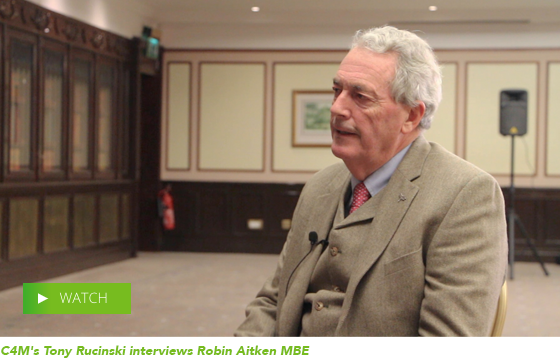
Robin Aitken MBE is a journalist who spent twenty-five years working for the BBC as a reporter and executive.
After leaving, he wrote The Noble Liar: How and Why the BBC Distorts the News to Promote a Liberal Agenda, a blistering exposé from an insider's perspective of how our state broadcaster skews its output in a liberal direction.
He explained to C4M's Tony Rucinski what this means for its portrayal of all things to do with marriage and the family.
Within the BBC has emerged, he says, an ideology committed to the notion that a liberal, tolerant, permissive society will increase the sum of human happiness.
When it comes to divorce, for example, this means the BBC promotes the lie that divorce makes everyone happier, when in fact marriage is designed to create happy, stable families. Healthy families are the bedrock of a healthy society, and in the long run it is better for individuals to weather the inevitable storms in their marriage, see it through and stick it out. Yet the BBC is very reluctant to engage with arguments like this.
You will never find, for instance, the BBC framing the problem of poor childhood mental health in terms of the breakdown of families. It is always in terms of resources or social media or something else. There is a persistent failure to engage with the real, deeper issues.
This is also a matter of free speech, Aitken says. The BBC frames its debates according to an ideology of transgressive morality that excludes the beliefs of him and millions like him. A great swathe of opinion in the country never gets a hearing on the national broadcaster.
At C4M we certainly recognise this picture of a media world hostile to traditional notions of marriage and the family. We hope that many more voices like Robin's will be heard within our media institutions and bring about the change that is needed.
|
Thursday, April 09, 2020
FORMER BBC JOURNALIST ROBIN AITKEN MBE SPEAKS TO C4M ABOUT MARRIAGE, THE FAMILY AND BBC BIAS


Monday, February 17, 2020
Books read in February 2020
1. Dominion: The Making of the Western Mind by
but it never seemed to me up to the claim of its title. Nether a history nor a proper thesis.
but it never seemed to me up to the claim of its title. Nether a history nor a proper thesis.
Wednesday, January 15, 2020
Books read January 2020
1. Siege by
Turks. A helpful historical notes tells you what is history and which parts are fiction.
2. Neither Bomb Nor Bullet: Benjamin Kwashi: Archbishop on the front line by
differentiations respective on the life of Ben Kwashi. A courageous man of peace and faith not afraid to speak the truth to authority. This is not a book for the faint hearted, especially the chapter on how his home was attacked in his absence and his wife brutally sexually assaulted. I do though question some of the history. AFAIK Vom, stared in 1922 was the first mission hospital in the north of Nigeria. I am surprised he does not recount Dt Miller establishing the first church at Zaria, the only one ever from converted Muslims. Also there is little mention of Christian work apart from the Anglicans, especially in Plateau State. Lacks an index.
3. The Ultimate Christmas Cracker by
indifferent. Tastes vary.
4.Brewer's Famous Quotations by
behind them. What make this collection unique is the stories behind the quotes and also details on how they have subsequently been used or misused.
5.Was it Only Yesterday?: The Last Generation of Northern Nigeria's "Turawa" by
history of Northern Nigeria under the British, to to be precise from around 1940 to 1966. I was there 1970 to 1982 so do take exception to the tile which should be 'The Last Generation of Northern Nigeria's governing "Turawa". In colonial Africa tare were three classes of expatriates. First class were government, second clad commercial. I was third class, missionary. The book is all about the first class with passing mention of he commercials and one chapter on missionaries. First class ended in the sixties. The other classes stayed longer. The stories of the handful of former public schoolboys who directly ruled millions on Nigerians are fascinating. But what is lacking is any real delineation of the country before the British came nor any critique of how indirect rule favoured the spread of Islam when Pax Britannica forbade Christian missions but allowed Islam to spread as never before. I am also surprise to fine no mention of Stanhope-White, nor hs books.
Turks. A helpful historical notes tells you what is history and which parts are fiction.
2. Neither Bomb Nor Bullet: Benjamin Kwashi: Archbishop on the front line by
differentiations respective on the life of Ben Kwashi. A courageous man of peace and faith not afraid to speak the truth to authority. This is not a book for the faint hearted, especially the chapter on how his home was attacked in his absence and his wife brutally sexually assaulted. I do though question some of the history. AFAIK Vom, stared in 1922 was the first mission hospital in the north of Nigeria. I am surprised he does not recount Dt Miller establishing the first church at Zaria, the only one ever from converted Muslims. Also there is little mention of Christian work apart from the Anglicans, especially in Plateau State. Lacks an index.
3. The Ultimate Christmas Cracker by
indifferent. Tastes vary.
4.Brewer's Famous Quotations by
behind them. What make this collection unique is the stories behind the quotes and also details on how they have subsequently been used or misused.
5.Was it Only Yesterday?: The Last Generation of Northern Nigeria's "Turawa" by
history of Northern Nigeria under the British, to to be precise from around 1940 to 1966. I was there 1970 to 1982 so do take exception to the tile which should be 'The Last Generation of Northern Nigeria's governing "Turawa". In colonial Africa tare were three classes of expatriates. First class were government, second clad commercial. I was third class, missionary. The book is all about the first class with passing mention of he commercials and one chapter on missionaries. First class ended in the sixties. The other classes stayed longer. The stories of the handful of former public schoolboys who directly ruled millions on Nigerians are fascinating. But what is lacking is any real delineation of the country before the British came nor any critique of how indirect rule favoured the spread of Islam when Pax Britannica forbade Christian missions but allowed Islam to spread as never before. I am also surprise to fine no mention of Stanhope-White, nor hs books.
Sunday, December 15, 2019
How many prime minsters?
First in the first two decades of a century
1700s - 7
1800s - 6
1900s - 5
2000s - 5
And in the century
17th - 22
18th - 21
19th - 21
Our Queen has had 14 prime ministers, Victoria had 10.
1700s - 7
1800s - 6
1900s - 5
2000s - 5
And in the century
17th - 22
18th - 21
19th - 21
Our Queen has had 14 prime ministers, Victoria had 10.
Friday, December 13, 2019
Three needed electoral reforms.
1. MPs representing the parts of the UK with devolved government should not be voting at Westminster on matters which affect England but have no relevance for their constituencies e.g The NHS in England.
2. MPs who leave the party for which they were elected should automatically have to face a by-election.
3. Electors in Sinn Fein constituencies who did not vote SF so have no representative at Westminster should be able to adopt another MP to represent them in parliament.
2. MPs who leave the party for which they were elected should automatically have to face a by-election.
3. Electors in Sinn Fein constituencies who did not vote SF so have no representative at Westminster should be able to adopt another MP to represent them in parliament.
Thursday, December 05, 2019
Books read and reviewed Dec 2019
1. Margaret Thatcher: The Authorized Biography, Volume Three: Herself Alone by
the all political careers end in tragedy. Here was a leader more honoured outside her country than within her own party at home. We read of her huge contribution to the end of the Cold War and the transformation of South Africa. But by two votes of her MPs she failed to be confirmed in office. Ironically her successor, Major similarly failed on his first ballot bu was elected with fewer votes ha Thatcher had received. She was betrayed primarily by the Cabinet and MP's concerned for their own electoral survival. Moore tellingly observed that she was loved and respected by those who worked for her but failed to take along with respect for her, those who served alongside her.
The final years, the decline into dementia are very sympathetically portrayed. We will not see her like again.
2. The Sacred Anointing: Preaching and the Spirit's Anointing in the Life and Thought of Martyn Lloyd Jones by
Stott gives a better exposition of this biblical terminology than does the Doctor.
I believe the Doctor was the greatest preacher of the last century but this study does not consider his failing as a pastor in a local church where you could attend for years and never be so much as offered a cup of tea by way of fellowship, much less any challenge as to joining the local church. Preaching is primary but it is not everything in church life.
the all political careers end in tragedy. Here was a leader more honoured outside her country than within her own party at home. We read of her huge contribution to the end of the Cold War and the transformation of South Africa. But by two votes of her MPs she failed to be confirmed in office. Ironically her successor, Major similarly failed on his first ballot bu was elected with fewer votes ha Thatcher had received. She was betrayed primarily by the Cabinet and MP's concerned for their own electoral survival. Moore tellingly observed that she was loved and respected by those who worked for her but failed to take along with respect for her, those who served alongside her.
The final years, the decline into dementia are very sympathetically portrayed. We will not see her like again.
2. The Sacred Anointing: Preaching and the Spirit's Anointing in the Life and Thought of Martyn Lloyd Jones by
Stott gives a better exposition of this biblical terminology than does the Doctor.
I believe the Doctor was the greatest preacher of the last century but this study does not consider his failing as a pastor in a local church where you could attend for years and never be so much as offered a cup of tea by way of fellowship, much less any challenge as to joining the local church. Preaching is primary but it is not everything in church life.
3. 2000 Years of Christ's Power Volume 3 by
most helpful were the where my own reading was weak, the radical reformation and the evangelical Catholic response to the reformation.
4.Dominion: A History of England Volume V by
Suspect by Robert Crais
Delightful whodunit where the hero is a dog and sometimes the dog narrates too. A good page turner.
6.Resurrectionist by
century London. The level of violence in nauseatingly oppressive. The plot combines unrealistic science fiction with well narrated historical fiction. But too gory for me.
4.Dominion: A History of England Volume V by
Suspect by Robert Crais
Delightful whodunit where the hero is a dog and sometimes the dog narrates too. A good page turner.
6.Resurrectionist by
century London. The level of violence in nauseatingly oppressive. The plot combines unrealistic science fiction with well narrated historical fiction. But too gory for me.
Thursday, November 07, 2019
How many kings since 1066 have been the eldest son?
Until the present day when primogeniture was moved to the eldest child, not son of the monarch, how many kings were eldest sons?
William II (Old Norman: Williame; c. 1056 – 2 August 1100), the third son of William the Conqueror.
Henry I (c. 1068 – 1 December 1135), also known as Henry Beauclerc, was King of England from 1100 to his death in 1135. He was the fourth son of William the Conqueror.
Stephen (1092/6 – 25 October 1154), often referred to as Stephen of Blois, was King of Englandfrom 22 December 1135 to his death. He was Count of Boulogne from 1125 until 1147 and Duke of Normandy from 1135 until 1144. His reign was marked by the Anarchy, a civil war with his cousin and rival, the Empress Matilda, whose son, Henry II, succeeded Stephen as the first of the Angevin kings of England.
Henry II (5 March 1133 – 6 July 1189), also known as Henry Curtmantle (French: Court-manteau), Henry FitzEmpress or Henry Plantagenet, ruled as King of England, Duke of Normandy and Aquitaine, Count of Anjou, Maine, and Nantes; at various times, he also partially controlled Scotland, Wales and the Duchy of Brittany. Henry was the son of Geoffrey of Anjou and Matilda, daughter of Henry I of England.
Richard I (8 September 1157 – 6 April 1199) was King of England from 1189 until his death. He also ruled as Duke of Normandy, Aquitaine and Gascony, Lord of Cyprus, Count of Poitiers, Anjou, Maine, and Nantes, and was overlord of Brittany at various times during the same period. He was the third of five sons of King Henry II of England and Duchess Eleanor of Aquitaine.As the third legitimate son of King Henry II, he was not expected to ascend to the throne.
John (24 December 1166 – 19 October 1216) was King of England from 1199 until his death in 1216. King Henry II of England and Duchess Eleanor of Aquitaine had five sons: William IX, Count of Poitiers, who died before John's birth; Henry the Young King; Richard I, Count of Poitiers (Lionheart); Geoffrey II, Duke of Brittany; and John.
1.Henry III (1 October 1207 – 16 November 1272), also known as Henry of Winchester, was King of England, Lord of Ireland, and Duke of Aquitaine from 1216 until his death.[1] The son of King Johnand Isabella of Angoulême, Henry assumed the throne when he was only nine. He was the first eldest son to become king.
2.Edward I (17/18 June 1239 – 7 July 1307), also known as Edward Longshanks and the Hammer of the Scots (Latin: Malleus Scotorum), was King of England from 1272 to 1307. Before his accession to the throne, he was commonly referred to as The Lord Edward.[1] The first son of Henry III.
Edward II (25 April 1284 – 21 September 1327), also called Edward of Carnarvon, was King of England from 1307 until he was deposed in January 1327. The fourth son of Edward I.
3.Edward III (13 November 1312 – 21 June 1377) was King of England and Lord of Ireland from January 1327 until his death. Eldes son of his deposed father.
Richard II (6 January 1367 – c. 14 February 1400), also known as Richard of Bordeaux, was King of England from 1377 until he was deposed in 1399. Richard's father, Edward the Black Prince, died in 1376, leaving Richard as heir apparent to King Edward III.
Henry IV (15 April 1367 – 20 March 1413), also known as Henry Bolingbroke (/ˈbɒlɪŋbrʊk/), was King of England from 1399 to 1413. He asserted the claim of his grandfather King Edward III, a maternal grandson of Philip IV of France, to the Kingdom of France.Henry was the son of John of Gaunt (the fourth son of Edward III) and Blanche of Lancaster.
William II (Old Norman: Williame; c. 1056 – 2 August 1100), the third son of William the Conqueror.
Henry I (c. 1068 – 1 December 1135), also known as Henry Beauclerc, was King of England from 1100 to his death in 1135. He was the fourth son of William the Conqueror.
Stephen (1092/6 – 25 October 1154), often referred to as Stephen of Blois, was King of Englandfrom 22 December 1135 to his death. He was Count of Boulogne from 1125 until 1147 and Duke of Normandy from 1135 until 1144. His reign was marked by the Anarchy, a civil war with his cousin and rival, the Empress Matilda, whose son, Henry II, succeeded Stephen as the first of the Angevin kings of England.
Henry II (5 March 1133 – 6 July 1189), also known as Henry Curtmantle (French: Court-manteau), Henry FitzEmpress or Henry Plantagenet, ruled as King of England, Duke of Normandy and Aquitaine, Count of Anjou, Maine, and Nantes; at various times, he also partially controlled Scotland, Wales and the Duchy of Brittany. Henry was the son of Geoffrey of Anjou and Matilda, daughter of Henry I of England.
Richard I (8 September 1157 – 6 April 1199) was King of England from 1189 until his death. He also ruled as Duke of Normandy, Aquitaine and Gascony, Lord of Cyprus, Count of Poitiers, Anjou, Maine, and Nantes, and was overlord of Brittany at various times during the same period. He was the third of five sons of King Henry II of England and Duchess Eleanor of Aquitaine.As the third legitimate son of King Henry II, he was not expected to ascend to the throne.
John (24 December 1166 – 19 October 1216) was King of England from 1199 until his death in 1216. King Henry II of England and Duchess Eleanor of Aquitaine had five sons: William IX, Count of Poitiers, who died before John's birth; Henry the Young King; Richard I, Count of Poitiers (Lionheart); Geoffrey II, Duke of Brittany; and John.
1.Henry III (1 October 1207 – 16 November 1272), also known as Henry of Winchester, was King of England, Lord of Ireland, and Duke of Aquitaine from 1216 until his death.[1] The son of King Johnand Isabella of Angoulême, Henry assumed the throne when he was only nine. He was the first eldest son to become king.
2.Edward I (17/18 June 1239 – 7 July 1307), also known as Edward Longshanks and the Hammer of the Scots (Latin: Malleus Scotorum), was King of England from 1272 to 1307. Before his accession to the throne, he was commonly referred to as The Lord Edward.[1] The first son of Henry III.
Edward II (25 April 1284 – 21 September 1327), also called Edward of Carnarvon, was King of England from 1307 until he was deposed in January 1327. The fourth son of Edward I.
3.Edward III (13 November 1312 – 21 June 1377) was King of England and Lord of Ireland from January 1327 until his death. Eldes son of his deposed father.
Richard II (6 January 1367 – c. 14 February 1400), also known as Richard of Bordeaux, was King of England from 1377 until he was deposed in 1399. Richard's father, Edward the Black Prince, died in 1376, leaving Richard as heir apparent to King Edward III.
Henry IV (15 April 1367 – 20 March 1413), also known as Henry Bolingbroke (/ˈbɒlɪŋbrʊk/), was King of England from 1399 to 1413. He asserted the claim of his grandfather King Edward III, a maternal grandson of Philip IV of France, to the Kingdom of France.Henry was the son of John of Gaunt (the fourth son of Edward III) and Blanche of Lancaster.
4.Henry V (16 September 1386 – 31 August 1422), also called Henry of Monmouth, was King of England from 1413 until his death in 1422.
5.Henry VI (6 December 1421 – 21 May 1471) was King of England from 1422 to 1461 and again from 1470 to 1471, and disputed King of France from 1422 to 1453. The only child of Henry V.
Edward IV (28 April 1442 – 9 April 1483) was King of England from 4 March 1461 to 3 October 1470,[1][2] and again from 11 April 1471 until his death. He was the first Yorkist king. Edward's father Richard of York had been the designated heir to King Henry VI until the birth of Henry's son Edward in 1453.
6.Edward V (2 November 1470 – c. 1483)[1] succeeded his father, Edward IV, as King of Englandand Lord of Ireland[2] upon the latter's death on 9 April 1483. He was never crowned.
Richard III (2 October 1452 – 22 August 1485) was King of England and Lord of Ireland from 1483 until his death in 1485. He was the last king of the House of York and the last of the Plantagenet dynasty.
When his brother Edward IV died in April 1483, Richard was named Lord Protector of the realm for Edward's eldest son and successor, the 12-year-old Edward V. Arrangements were made for Edward's coronation on 22 June 1483. Before the king could be crowned, the marriage of his parents was declared bigamous and therefore invalid. Now officially illegitimate, their children were barred from inheriting the throne.
Henry VII (Welsh: Harri Tudur; 28 January 1457 – 21 April 1509) was the King of England and Lord of Ireland from his seizure of the crown on 22 August 1485 to his death. He was the first monarch of the House of Tudor.Henry's main claim to the English throne derived from his mother through the House of Beaufort. Henry's mother, Lady Margaret Beaufort, was a great-granddaughter of John of Gaunt, Duke of Lancaster, fourth son of Edward III.
Henry VIII (28 June 1491 – 28 January 1547) was King of England from 1509 until his death in 1547. Henry Tudor was the third child and second son of Henry VII and Elizabeth of York.
7.Edward VI (12 October 1537 – 6 July 1553) was the King of England and Ireland from 28 January 1547 until his death. He was crowned on 20 February at the age of nine.[1] Edward was the son of Henry VIII and Jane Seymour
Lady Jane Grey (c. 1537[3] – 12 February 1554), also known as Lady Jane Dudley (after her marriage)[4] and as "the Nine Days' Queen",[5] was an English noblewoman and de facto Queen of England and Ireland from 10 July until 19 July 1553.
Mary I (18 February 1516 – 17 November 1558), also known as Mary Tudor, was the queen of England and Ireland from July 1553 until her death. Mary was the only child of Henry VIII by his first wife, Catherine of Aragon, to survive to adulthood.
Elizabeth I (7 September 1533 – 24 March 1603)[1] was Queen of England and Ireland from 17 November 1558 until her death on 24 March 1603. Sometimes called the Virgin Queen, Glorianaor Good Queen Bess, Elizabeth was the last of the five monarchs of the House of Tudor.Elizabeth was the daughter of Henry VIII and Anne Boleyn, his second wife.
James VI and I (James Charles Stuart; 19 June 1566 – 27 March 1625) was King of Scotland as James VI from 24 July 1567 and King of England and Ireland as James I from the union of the Scottish and English crowns on 24 March 1603 until his death in 1625. James was the son of Mary, Queen of Scots, and a great-great-grandson of Henry VII, King of England and Lord of Ireland.
Charles I (19 November 1600 – 30 January 1649)[a] was King of England, King of Scotland, and King of Ireland from 27 March 1625 until his execution in 1649.Charles was born into the House of Stuart as the second son of King James VI of Scotland.
Charles II (29 May 1630 – 6 February 1685)[c] was king of England, Scotland, and Ireland. He was king of Scotland from 1649 until his deposition in 1651, and king of England, Scotland and Ireland from the 1660 Restoration of the monarchy until his death.Charles II was the eldest surviving child of Charles I of England, Scotland and Ireland and Henrietta Maria of France. His elder brother died the day he was born.
James II and VII (14 October 1633O.S. – 16 September 1701[1]) was King of England and Irelandas James II and King of Scotland as James VII,[3] from 6 February 1685 until he was deposed in the Glorious Revolution of 1688. James inherited the thrones of England, Ireland and Scotland from his elder brother Charles II.
William III (Dutch: Willem; 4 November 1650 – 8 March 1702),[2] also widely known as William of Orange, was sovereign Prince of Orange from birth, Stadtholder of Holland, Zeeland, Utrecht, Guelders and Overijssel in the Dutch Republic from the 1670s and King of England, Ireland and Scotland from 1689 until his death, co-reigning with his wife, Queen Mary II.
Mary II (30 April 1662 – 28 December 1694) was Queen of England, Scotland, and Ireland, co-reigning with her husband, King William III & II, from 1689 until her death. Although their father James, Duke of York, was Roman Catholic, Mary and her sister Anne were raised as Anglicans at the wishes of their uncle, King Charles II. He lacked legitimate children, making Mary second in the line of succession as James's eldest child.
Anne (6 February 1665 – 1 August 1714)[a] was the Queen of England, Scotland and Irelandbetween 8 March 1702 and 1 May 1707. On 1 May 1707, under the Acts of Union, the kingdoms of England and Scotland united as a single sovereign state known as Great Britain. She continued to reign as Queen of Great Britain and Ireland until her death in 1714. Anne was born in the reign of Charles II to his younger brother and heir presumptive, James,
George I (George Louis; German: Georg Ludwig; 28 May 1660 – 11 June 1727)[a] was King of Great Britain and Ireland from 1 August 1714 and ruler of the Duchy and Electorate of Brunswick-Lüneburg (Hanover) in the Holy Roman Empire from 23 January 1698 until his death in 1727. Born in Hanover to its Elector Ernest Augustus and Electress Sophia, George inherited the titles and lands of the Duchy of Brunswick-Lüneburg from his father and uncles. A succession of European wars expanded his German domains during his lifetime; he was ratified as prince-electorof Hanover in 1708. After the deaths in 1714 of his mother and his second cousin Anne, Queen of Great Britain (r. 1702–1714), George ascended the British throne as Anne's closest living Protestant relative under the Act of Settlement 1701.
8.George II (George Augustus; German: Georg II. August; 30 October / 9 November 1683O.S./N.S. – 25 October 1760) was King of Great Britain and Ireland, Duke of Brunswick-Lüneburg (Hanover) and a prince-elector of the Holy Roman Empire from 11 June 1727 (O.S.) until his death in 1760.
George III (George William Frederick; 4 June 1738[c] – 29 January 1820) was King of Great Britainand King of Ireland from 25 October 1760 until the union of the two countries on 1 January 1801, after which he was King of the United Kingdom of Great Britain and Ireland until his death in 1820. George was born in London at Norfolk House in St James's Square. He was the grandson of King George II, and the eldest son of Frederick, Prince of Wales, and Augusta of Saxe-Gotha.
9.George IV (George Augustus Frederick; 12 August 1762 – 26 June 1830) was King of the United Kingdom of Great Britain and Ireland and King of Hanover following the death of his father, King George III, on 29 January 1820, until his own death ten years later.
William IV (William Henry; 21 August 1765 – 20 June 1837) was King of the United Kingdom of Great Britain and Ireland and King of Hanover from 26 June 1830 until his death in 1837. The third son of George III, William succeeded his elder brother George IV
Victoria (Alexandrina Victoria; 24 May 1819 – 22 January 1901) was Queen of the United Kingdom of Great Britain and Ireland from 20 June 1837 until her death. Victoria was the daughter of Prince Edward, Duke of Kent and Strathearn (the fourth son of King George III), and Princess Victoria of Saxe-Coburg-Saalfeld.
10.Edward VII (Albert Edward; 9 November 1841 – 6 May 1910) was King of the United Kingdom of Great Britain and Ireland from 22 January 1901 until his death in 1910.
George V (George Frederick Ernest Albert; 3 June 1865 – 20 January 1936) was King of the United Kingdom and the British Dominions, and Emperor of India, from 6 May 1910 until his death in 1936. Born during the reign of his grandmother Queen Victoria, George was third in the line of successionbehind his father, Prince Albert Edward, and his own elder brother, Prince Albert Victor. From 1877 to 1891, George served in the Royal Navy, until the unexpected death of his elder brother in early 1892 put him directly in line for the throne.
11.Edward VIII (Edward Albert Christian George Andrew Patrick David; 23 June 1894 – 28 May 1972) was King of the United Kingdom and the Dominions of the British Empire, and Emperor of India, from 20 January 1936 until his abdication on 11 December of that year.Edward was born during the reign of his great-grandmother Queen Victoria as the eldest child of the Duke and Duchess of York, later King George V and Queen Mary.
George VI (Albert Frederick Arthur George; 14 December 1895 – 6 February 1952) was King of the United Kingdom and the Dominions of the British Commonwealth from 11 December 1936 until his death. Known as "Bertie" among his family and close friends, George VI was born in the reign of his great-grandmother Queen Victoria, and was named after his great-grandfather Albert, Prince Consort. As the second son of King George V, he was not expected to inherit the throne.
Elizabeth II (Elizabeth Alexandra Mary Windsor;[2] born 21 April 1926)[a] is Queen of the United Kingdom and the other Commonwealth realms.[b]Elizabeth was born in London as the first child of the Duke and Duchess of York, later King George VI and Queen Elizabeth, and she was educated privately at home. Her father acceded to the throne on the abdication of his brother King Edward VIII in 1936, from which time she was the heir presumptive.
Our queen is only the second queen regnant to have succeeded as an eldest daughter of the previous king.
So the answer to my question is 11 eldest sons inherited the throne from their fathers but only 9 of these were crowned king.
Subscribe to:
Posts (Atom)
